

Dr. Pen Official Store
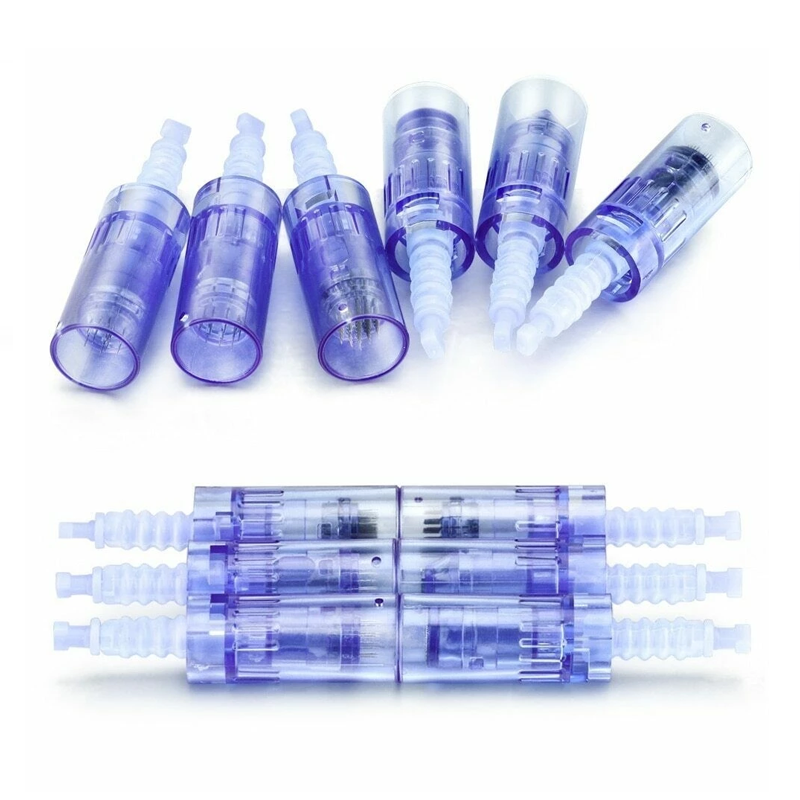
Dr. Pen A6 Replacement Cartridges
Dr. Pen A6 Replacement Cartridges
Couldn't load pickup availability
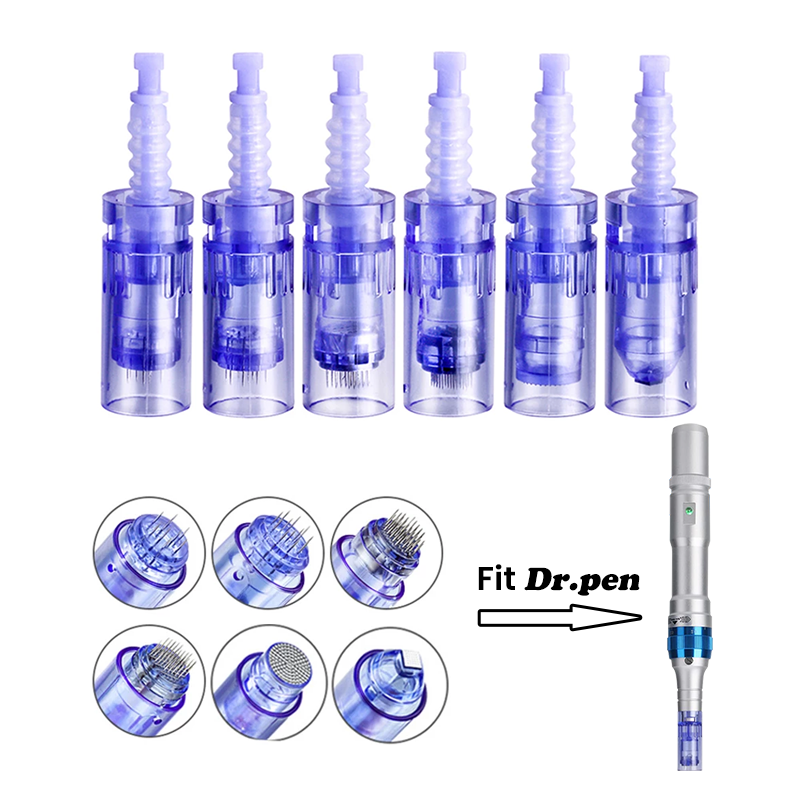
A6 heads are made for the A6 device — Dr. Pen matches each cartridge system to particular models — so a pack from another line will not seat here. That includes the A6S: one letter away, and a different cartridge altogether.
Thirteen heads, weighted to the wide end
Depth is set on the pen: the A6 depth dial runs from 0 mm to 2.5 mm, so the same head can be run shallow on the face and deeper on the body. What changes across this range is how much skin one pass covers, and the last two needling heads cover a great deal.
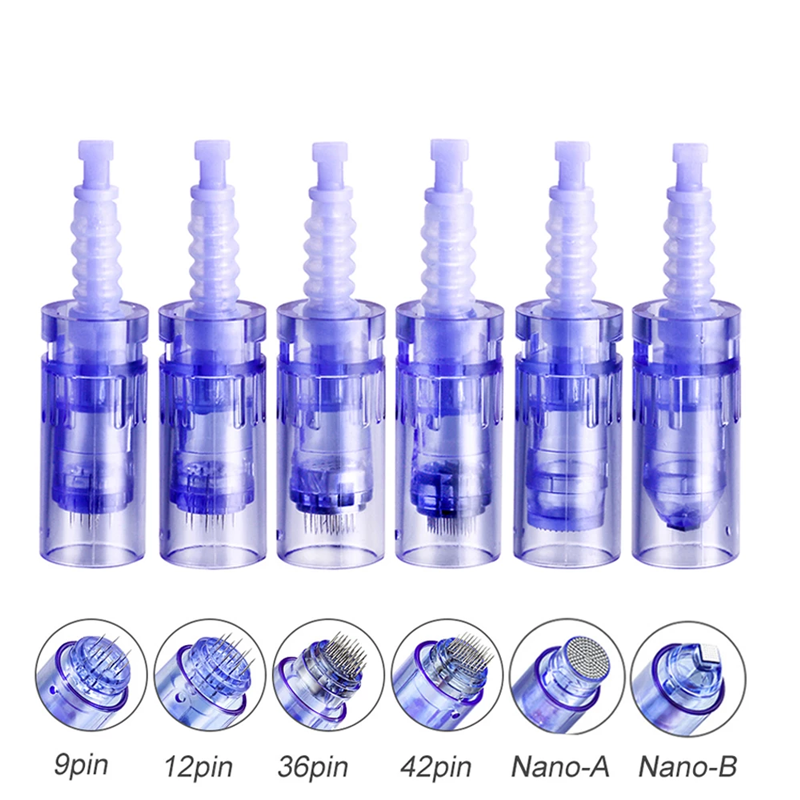
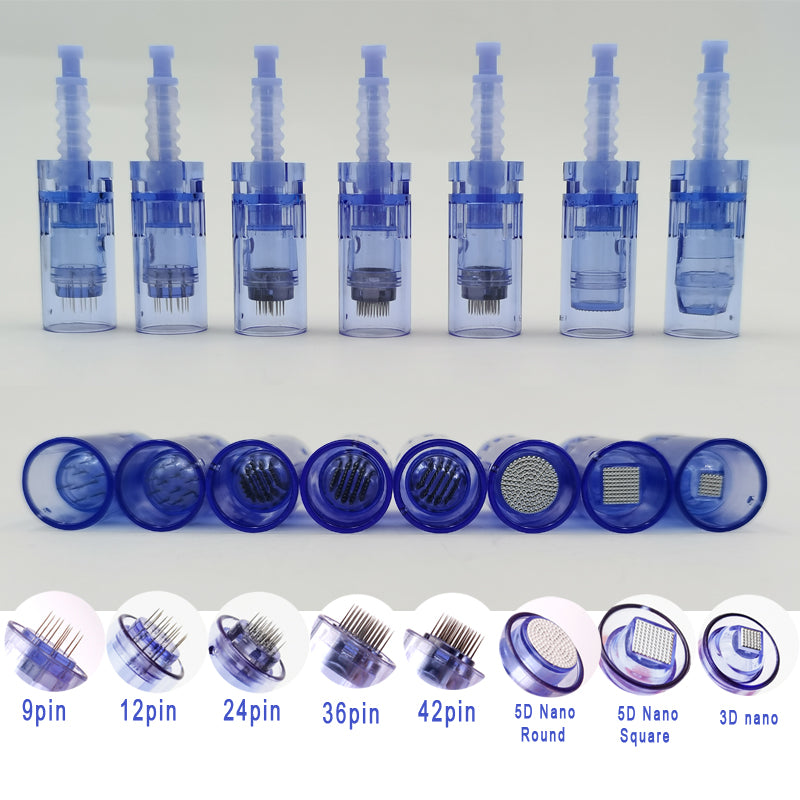
| Head | Best for | Typical depth |
|---|---|---|
| 1-pin | The finest pigment point — the tightest detail in a pigment protocol | Pigment protocol — shallow |
| 3-pin | A small pigment head, between single-point work and the 5-pin | Pigment protocol — shallow |
| 5-pin | A pigment head with a little more width, for outlines and small areas | Pigment protocol — shallow |
| F5 | A flat pigment tip — for filling a small area evenly rather than drawing a line | Pigment protocol — shallow |
| F7 | The second flat tip in this range — the same kind of job, in the other configuration | Pigment protocol — shallow |
| 9-pin | Needling detail — a single line, or a narrow band between sections | 0.25–0.5 mm |
| 12-pin | Targeted facial passes — the head most A6 owners start with | 0.25–1.0 mm |
| 24-pin | Whole-face coverage with fewer passes per zone | 0.25–1.0 mm |
| 36-pin | Scalp bands and partings, plus neck, jawline and body areas | 0.5–1.5 mm |
| 42-pin | The widest head here — the fastest way across a large area | 0.5–1.5 mm |
| Round Nano | No-needle surface work — pressing a serum in, under-eye, weekly upkeep | ≤ 0.25 mm — no needles |
| 3D | The three-dimensional nano tip — for gliding a serum along the contours of the face | ≤ 0.25 mm — no needles |
| 5D | The multi-angle nano tip — the widest of the three nano surfaces | ≤ 0.25 mm — no needles |
Safe depth by concern is in our needle depth guide — at home, keep facial depth at or below 1.0 mm; above 1.5 mm is for trained practitioners.
Scalp passes with the 36-pin and 42-pin
These two are the heads a scalp or body routine is built around, and they do the same job in different amounts of time. Scalp work runs in narrow bands between sections rather than across one open area, so the 36-pin is usually the easier head to steer along a parting. The 42-pin earns its place further back, where the surface is flatter and each pass can cover more ground. Set depth shallow on the scalp — around 0.5 mm — whichever of the two you fit.
- 36-pin — bands, partings and curved surfaces.
- 42-pin — large areas, fewer passes.
- Depth does not follow head width. A wider head covers more skin per pass; it never asks for a deeper setting.
How the grid sizes behave on different areas is covered in our cartridges explained guide.
The pack itself: what should be in it
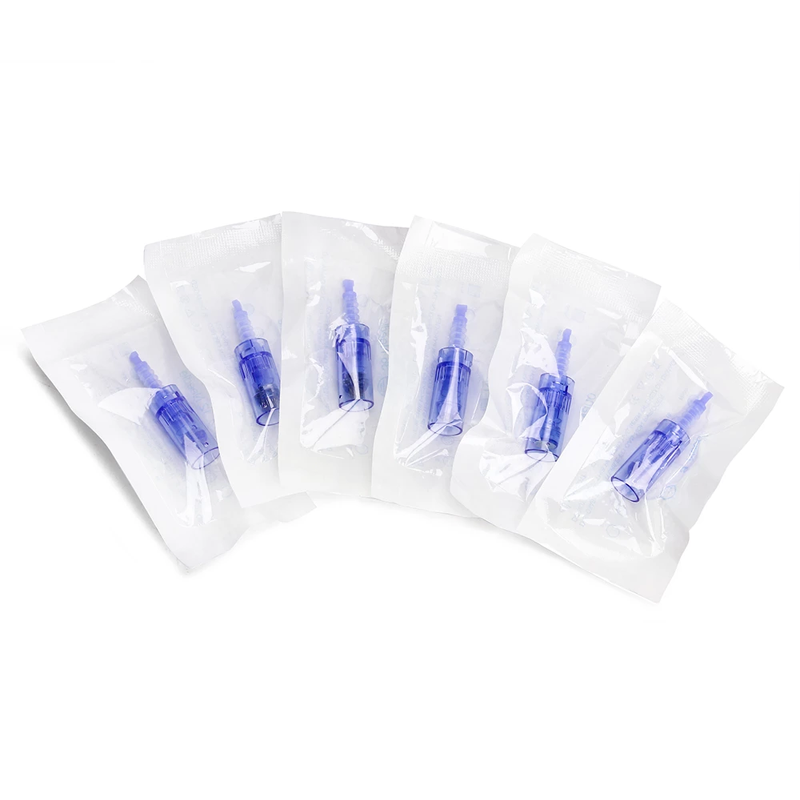
- One sterile blister per head, with manufacturing and expiry dates printed on it.
- Single use. A head is spent when the session ends — see can you reuse Dr. Pen cartridges?
- A listing you can verify. We are an authorised Dr. Pen retailer and stock arrives through the official supply chain — how to verify your Dr. Pen.
Complete Your Microneedling Setup
❓ Frequently Asked Questions
Which A6 head do I want for scalp passes?
The 36-pin, for most routines. Scalp work is done in bands between sections, and the 36-pin is narrow enough to stay inside a parting while still covering it in a couple of passes. Keep the 42-pin for the flatter areas further back, set the depth shallow — around 0.5 mm — and use a fresh head each time, because a scalp pass shares the head with nothing else.
Is the 42-pin worth adding if I already use the 36-pin?
If your sessions are mostly face and neck, no — the 36-pin already covers that. It is worth adding if you work larger areas: back, abdomen, thighs or a full scalp, where the extra width cuts the number of passes noticeably. The two do not do different jobs; the 42-pin simply does the same job on more skin at once.
Can I cover my whole face with the 24-pin alone?
Yes. The 24-pin is wide enough to work a full face at facial depth without needing a second head, which is why it is the head most owners end up reordering. What it does not do is the very fine work — for a single line or a narrow zone, the 9-pin gives you more control, and for the surface there is the Round Nano.
Should I order the 9-pin or the 12-pin for facial work on the A6?
Take the 12-pin unless you know you want the narrower head. The 12-pin is the standard facial size here — it covers the face in a reasonable number of passes and is the head most people start with. The 9-pin is for the sessions where you are following a specific line rather than covering an area; useful to have, rarely the head you order in a set.
Does body work need a different head from facial work on the A6?
Usually yes, and the reason is time rather than technique. Body areas are several times the size of a face, so a 36-pin or 42-pin head saves a great deal of passing — the same job with fewer, wider strokes. If you only ever work the face and neck, the 24-pin covers it and the wider heads are optional.
A6 or A6S — does the one letter change the cartridge?
It does, and this is the pair in the range most often ordered by mistake. The A6 and the A6S are two different pens on two different cartridge systems: an A6S pack will not seat on an A6, and an A6 pack will not seat on an A6S. If you own both, keep the packs apart and order by the model on the pen — and if the pen in front of you is an A6S, you want the A6S cartridge range rather than this one.
Share
The pack was received in good conditions and the pieces work perfect