Compatibility first. Cartridge type second. Depth is a separate decision.
A cartridge is not universal just because the pin count looks familiar. The correct choice starts with the exact pen model and fitting system, then narrows by cartridge type, treatment area and professional safety limits.
The four decisions that prevent most cartridge mistakes
Identify the exact pen
Read the model on the handpiece or original box. M8 and M8S, or A6 and A6S, are different product names and do not automatically share cartridges.
Confirm the fitting family
Use the compatibility table below. Where the product page names a lock or mount, we reproduce that wording; where it does not, match by model only.
Choose a cartridge type
Compare the pin configurations or Nano heads actually offered for that family. A type available for one family may not exist for another.
Separate type from depth
Pin count describes the cartridge head. Needle depth is a separate setting and safety decision that depends on device, area and professional assessment.
Step 1: match the cartridge to the pen model
The table below is based on the compatibility statements and live variants shown on our individual cartridge pages, fact-checked on November 25, 2026. It is deliberately model-first: a cartridge that does not seat correctly should never be forced.
| Pen model(s) | Verified cartridge family or fitting description | Pin and Nano options currently listed | Correct cartridge page |
|---|---|---|---|
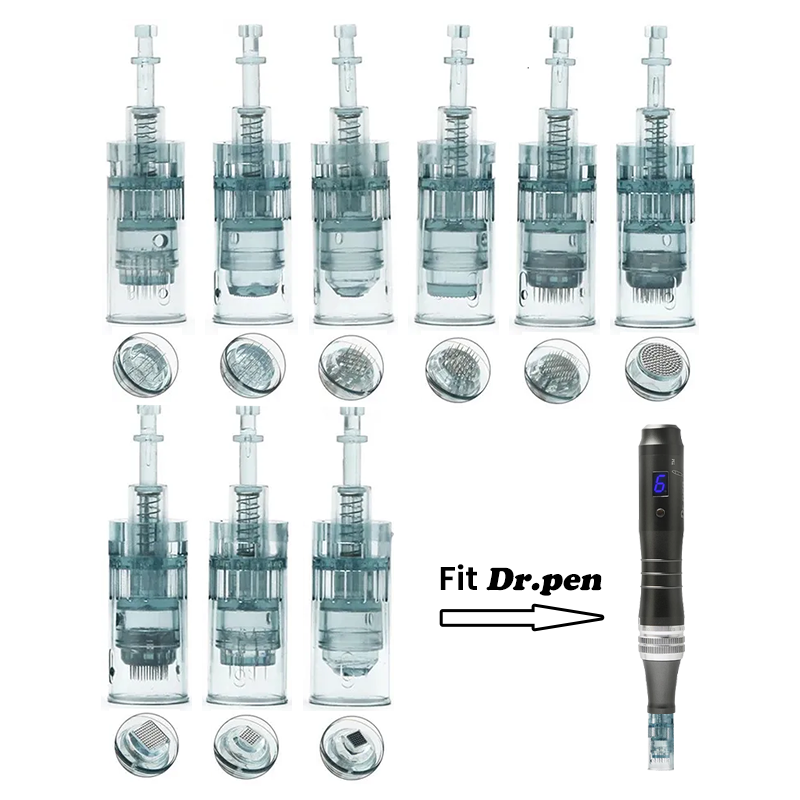
| M8S, A8S, A11, A9 | Shared three-snap family. The product page describes three contact points and a push-and-click fit. | 12, 18, 24, 36, 42 pin; R-Nano; S-Nano | M8S / A8S / A11 / A9 cartridges |
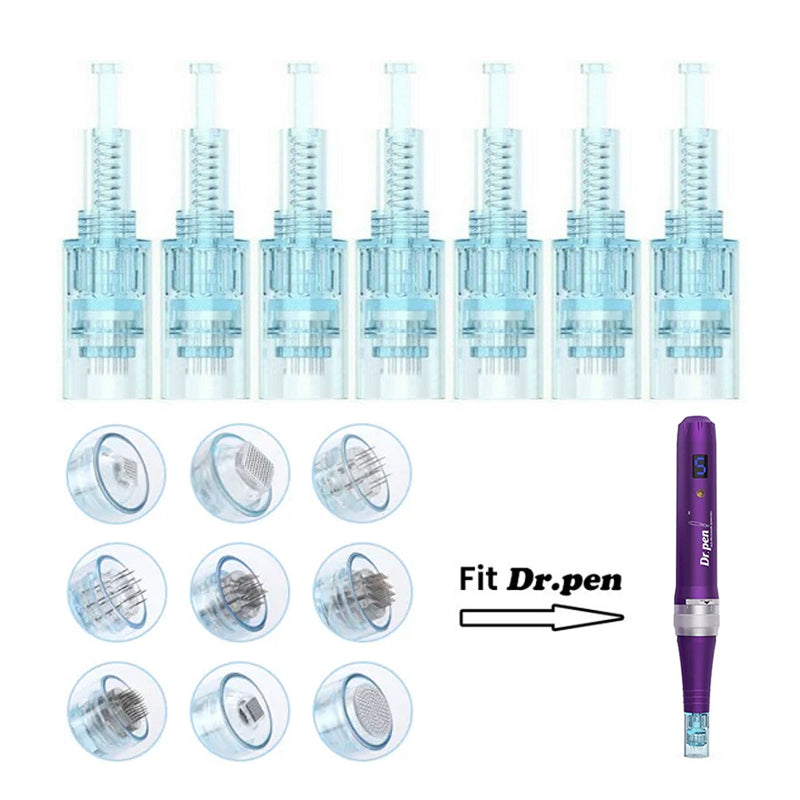
| M8, M7S, A6S | Shared family. The A6S page describes a turn-and-lock bayonet mount; the M8 page confirms the same cartridges fit M8, M7S and A6S. | 11, 16, 24, 36, 42 pin; Round Nano; 5D Nano | M8 / M7S cartridges · A6S cartridges |
| A6 | Dedicated A6 cartridge system. The A6 page explicitly excludes A6S cartridges. | 1, 3, 5, 9, 12, 24, 36, 42 pin; F5; F7; Round Nano; 3D; 5D | A6 cartridges |
| A1 | Dedicated A1 family; both A1 handpieces use this family. The page explicitly states that A1 and A6 heads do not interchange. | 1, 3, 5, 9, 12, 24, 36, 42 pin; F5; F7; Round Nano; 3D; 5D | A1 cartridges |
| A7 | Dedicated A7 family. The page excludes M-series, A6S and A8S heads. | 9, 12, 24, 36, 42 pin; Round Nano; 3D | A7 cartridges |
| A10 | Dedicated A10 family. | 12, 24, 36, 42 pin; Round Nano | A10 cartridges |
| X5 | Screw-thread fitting: the cartridge turns into place rather than clicking onto a snap mount. | 9, 12, 24, 36, 42 pin; Round Nano; 3D; 5D | X5 cartridges |
| M9 | M9-only cartridge architecture with Smart Chip ID, electronic alignment contacts and an arrow-aligned twist lock. | 18, 36, 42 pin; Round Nano | M9 cartridges |
| E30, M7, M5, N2 | One shared model-specific family for all four pens. | 1, 3, 5, 9, 12, 24, 36, 42 pin; F5; F7; Round Nano; 3D Nano; 3D Silicon; 5D Nano | E30 / M7 / M5 / N2 cartridges |
| Bio Pen Q2, Q1S | Shared Q2/Q1S cartridge family; no adapter is required between these two pens. | 9, 14, 25 pin; Nano | Q2 / Q1S cartridges |
| Hydra Pen H2 | Capsule cartridge with a clear reservoir and fill scale. Needle length is fixed by the selected H2 cartridge. | 12 pin at 0.25, 0.5 or 1.0 mm; Nano-HS; Nano-HR | H2 cartridges |
| Hydra Pen H3, H5 | Shared H3/H5 reservoir-cartridge family; the page excludes H6, Bio Pen and A/M-series systems. | 12, 24, 36 pin; Nano-Round; Nano-Square | H3 / H5 cartridges |
| Hydra Pen H6 | H6-specific head with an integrated 3 mL reservoir. | 18, 36, 42 pin; Nano-R | H6 cartridges |
What the fittings look like on the current product pages

M8S / A8S / A11 / A9
Verified shared three-snap family. Use only with the four models named on this listing.
M8 / M7S / A6S
Verified shared family. The A6S listing describes a turn-and-lock bayonet fit.
X5 screw-thread system
The X5 cartridge screws into the pen. It is not a substitute for snap or bayonet families.

M9 Smart Chip system
M9 heads use electronic contacts, arrow alignment and a clockwise twist lock.
Step 2: understand pin count, cartridge type and Nano
Pin count tells you how many pins are arranged in the cartridge head. It does not tell you whether the cartridge fits your pen, how deep it will be used, or whether it is appropriate for a particular person. Those are separate decisions.
| Cartridge category | What changes | What it can help you compare | What it cannot decide alone |
|---|---|---|---|
| Lower pin counts | Fewer contact points and a different distribution across the head. | Localized control and the cartridge options available within a compatible family. | Safe depth, diagnosis or whether the procedure is suitable. |
| Mid-range pin counts | A balance between contact density and coverage. | Broader facial or localized-area planning after compatibility is confirmed. | That one count is universally “best” for pores, scars or wrinkles. |
| Higher pin counts | More contact points spread across the head. | Coverage planning for broader, flatter areas when the device instructions support it. | That more pins produce a stronger or deeper treatment. |
| Nano heads | A surface-contact design rather than a conventional sharp-needle array; construction varies by family. | Surface-level cosmetic routines and comparison with true needle cartridges. | That Nano is interchangeable with a needle cartridge or appropriate for every pen. |
For a detailed comparison of individual pin counts, continue to Dr. Pen Cartridges Explained: 9, 12, 16, 36 Pin & Nano. Pin-count articles should explain differences; this page remains the model-first decision hub.
Step 3: use both treatment area and skin concern
“Face,” “scalp” or “body” is not enough information by itself. A useful cartridge decision combines two axes: where the procedure is being considered and what type of concern is present. Acne discoloration is not the same as an indented acne scar; a flat abdominal scar is not the same as a raised or keloid-prone scar.
Face
Separate post-acne color changes, atrophic acne scars, enlarged-looking pores, uneven texture and facial lines. Do not needle over active inflammatory breakouts.
Eye and lip area
Thin skin, small curved surfaces and proximity to delicate structures require a more conservative, professionally assessed plan. Nano and needle cartridges are not equivalent.
Neck and décolletage
Movement, sun exposure and thinner nonfacial skin change the risk–benefit discussion. Do not copy a facial setting or cartridge choice without assessment.
Scalp and hairline
Hair density, visibility, parting, hygiene and the cause of hair loss all matter. Cartridge selection cannot diagnose or treat unexplained hair loss.
Abdomen, hips, thighs and arms
Stretch marks and broad textural concerns cover larger areas. Location, scar type, age of the mark and personal scar history matter more than choosing the highest pin count.
Body scars and hands
Flat, indented, raised and keloid-prone scars need different evaluation. Raised, changing, painful or itchy scars should be assessed by a qualified healthcare professional.
| Area or concern | First distinguish | Cartridge decision should consider | Stop and seek professional assessment when |
|---|---|---|---|
| Post-acne marks | Flat discoloration versus true tissue indentation. | Whether microneedling is appropriate at all, compatible cartridge family, coverage and skin response. | There is active acne, infection, an unexplained rash or recent isotretinoin use. |
| Atrophic acne scars | Ice-pick, boxcar and rolling patterns; localized versus widespread scars. | Professional scar assessment, device authorization, cartridge geometry and depth as separate variables. | Scars are raised, changing, inflamed or associated with keloid history. |
| Pores, texture and facial lines | General texture versus a medical skin condition. | Even coverage, conservative protocol and the types available for the compatible family. | Skin is irritated, sunburned, actively inflamed or healing abnormally. |
| Eye, lip, neck and décolletage | Surface cosmetic goal versus deeper tissue procedure. | Thin or mobile skin, control, Nano versus needle design and professional limits. | The plan involves eyelids, mucosal lip tissue, lesions or uncertain anatomy. |
| Scalp or hairline | Cosmetic routine versus a hair-loss condition requiring diagnosis. | Hair obstruction, clean sectioning, compatible head, professional depth and cause of hair loss. | Hair loss is sudden, patchy, scarring, inflamed, painful or unexplained. |
| Stretch marks | Location, mature pale marks versus newer red/purple marks, and scar tendency. | Broad-area coverage, cartridge availability, tissue condition and professional protocol. | You are pregnant or breastfeeding, or have keloid tendency, infection or an active skin disorder. |
| Body scars | Flat/indented versus raised/hypertrophic/keloid. | Scar type, anatomical site, device authorization and professional treatment plan. | The scar is raised, painful, itchy, growing, infected or undiagnosed. |
Evidence context: the FDA states that legally authorized microneedling devices are authorized only for specified uses and body areas, and that risks for other uses or combinations may be unknown. This guide therefore organizes decisions; it does not prescribe a cartridge or depth for a medical condition.
Step 4: keep pin count and needle depth separate
Pin count / head type
Describes the cartridge configuration offered within a compatible fitting family. It affects contact pattern and coverage, but it does not set treatment depth.
Needle depth
Describes needle extension or the fixed length of a specific head. Depth changes risk and must be considered by area, device instructions, skin condition and practitioner training.
Do not infer that a lower pin count should be used deeper, or that a higher pin count is automatically gentler. For depth-specific guidance and safety limits, read the Dr. Pen needle depth guide.
The safety rules that do not change with pin count
Inspect before opening
- Do not use a damaged, open or wet sterile barrier.
- Check that the model and variant match the order.
- Do not touch the pins or Nano contact surface.
Never force the fit
- Stop if the cartridge resists seating or wobbles.
- Recheck the exact pen model.
- A familiar pin count does not prove compatibility.
Know when not to proceed
- Active infection, rash, cold sores or inflamed acne.
- Pregnancy/breastfeeding, keloid history or relevant medical conditions.
- Unexplained lesions, scarring or hair loss.
The FDA also notes that microneedling devices have not been authorized to deliver cosmetics, topical medications, vitamin solutions, drugs or blood products into the skin. Any combination protocol should follow the device labeling and qualified professional guidance—not a cartridge marketing claim.
For the full evidence and disposal discussion, see Can You Reuse Dr. Pen Cartridges?
Hydra Pen cartridges are a separate reservoir system
Hydra Pen H2, H3/H5 and H6 heads combine a treatment surface with a liquid reservoir, but they are not one universal H-series family. H2 uses fixed-length capsule cartridges; H3 and H5 share one family; H6 uses its own 3 mL reservoir head.
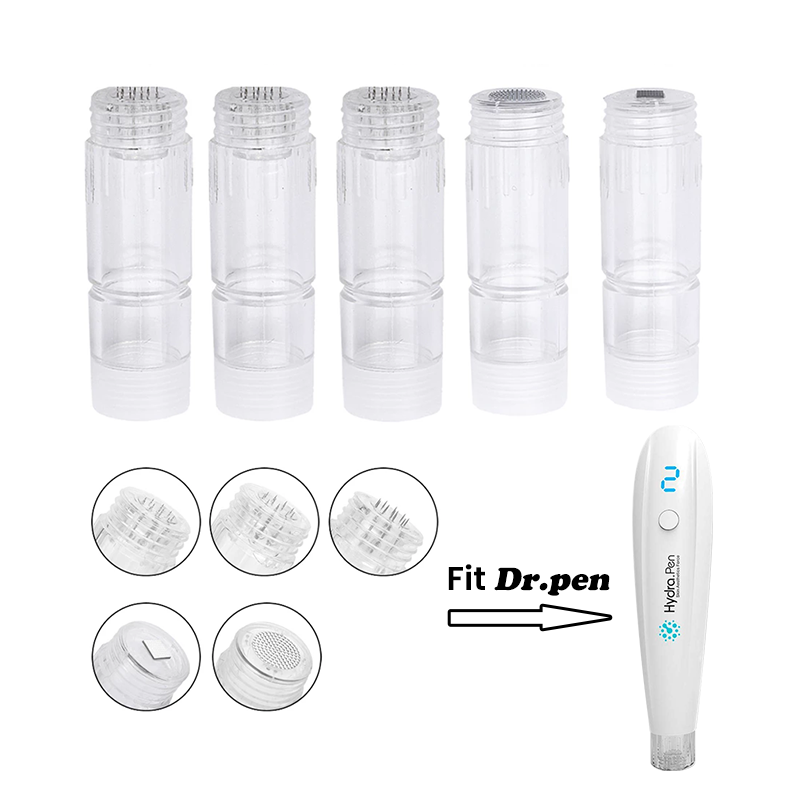
Hydra Pen H2
Choose the cartridge by both head type and fixed needle length.
View H2 cartridge options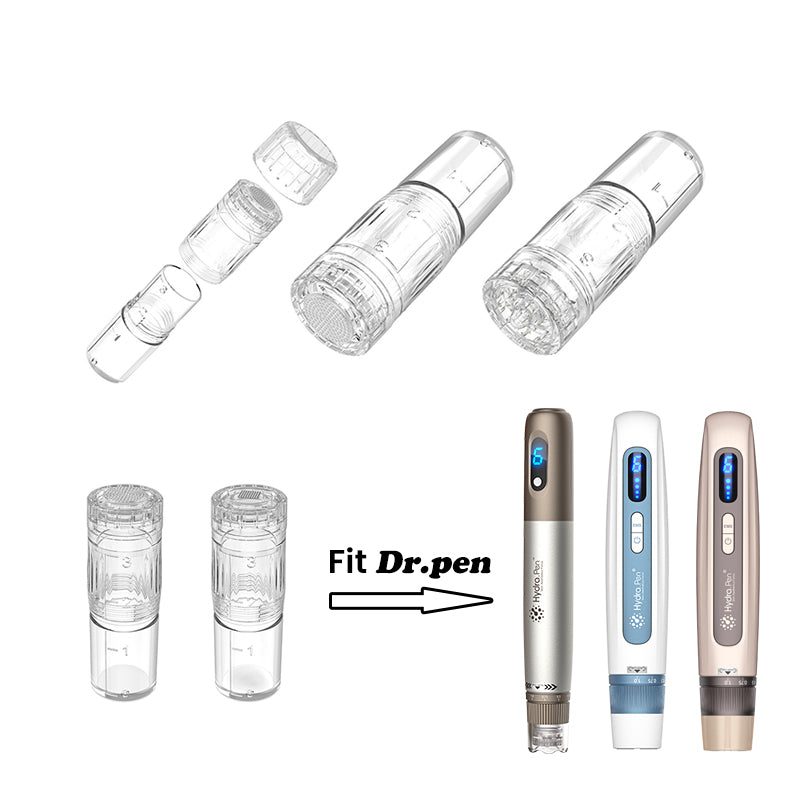
Hydra Pen H3 / H5
H3 and H5 share a cartridge family; it does not fit H6 or standard A/M-series pens.
View H3/H5 cartridge options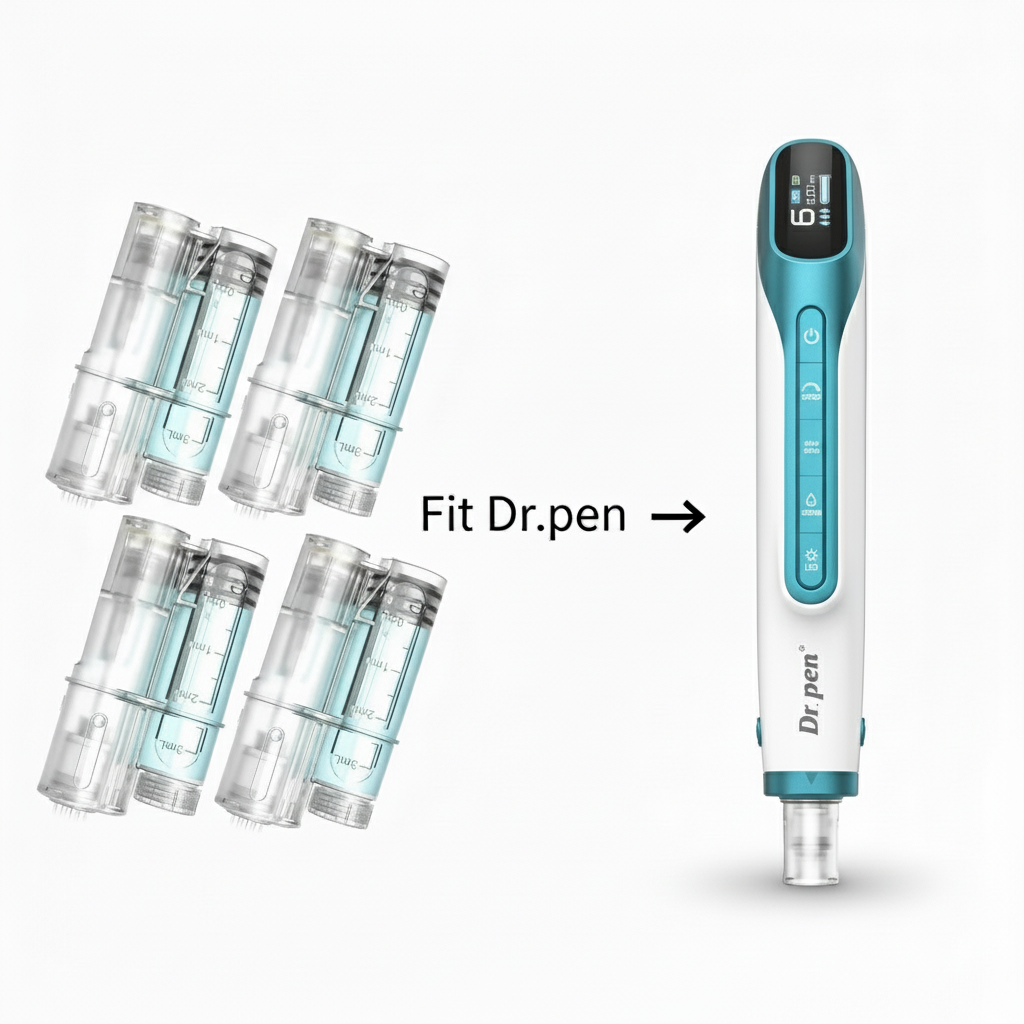
Frequently asked cartridge questions
Are all Dr. Pen cartridges interchangeable?
How do I know which cartridge fits my Dr. Pen?
Does a higher pin count mean a deeper treatment?
Is a Nano cartridge the same as a microneedling cartridge?
Can I reuse a Dr. Pen cartridge if I disinfect it?
Which cartridge should I use for acne marks?
Which cartridge is best for stretch marks?
Finished identifying your cartridge family?
Browse the complete cartridge collection only after confirming the exact pen model. Each product page shows the pin and Nano variants currently available for that family.
Browse all Dr. Pen cartridges Return to the complete Dr. Pen guideSources and editorial method
This page separates three kinds of evidence: compatibility and live variants are taken from the linked product pages; medical-device safety limits are taken from regulatory and peer-reviewed sources; search behavior is used only to organize questions, not to prove clinical claims.
- U.S. Food and Drug Administration: Microneedling Devices — authorized uses, risks, contraindication considerations and single-use cartridge safety. Updated October 15, 2025.
- FDA Consumer Update: Benefits, Risks and Safety — device categories, professional training and infection risk.
- Jaiswal S, Jawade S. Microneedling in Dermatology: A Comprehensive Review of Applications, Techniques, and Outcomes. Cureus. 2024;16(9):e70033. PMID 39449889.
- A Systematic Review Examining the Potential Adverse Effects of Microneedling.
- Microneedling for the Treatment of Scars: An Update for Clinicians.
- Prevention of Ageing—The Role of Micro-Needling in Neck and Cleavage Rejuvenation.
- Microneedling and Its Use in Hair Loss Disorders: A Systematic Review.
Compatibility fact-check: November 25, 2026. Product offerings can change; verify the live linked product page before ordering. Editorial scope: educational cartridge selection and site navigation, not medical diagnosis or a treatment prescription.