

Dr. Pen Official Store
Dr. Pen X5 Cartridges
Dr. Pen X5 Cartridges
Couldn't load pickup availability
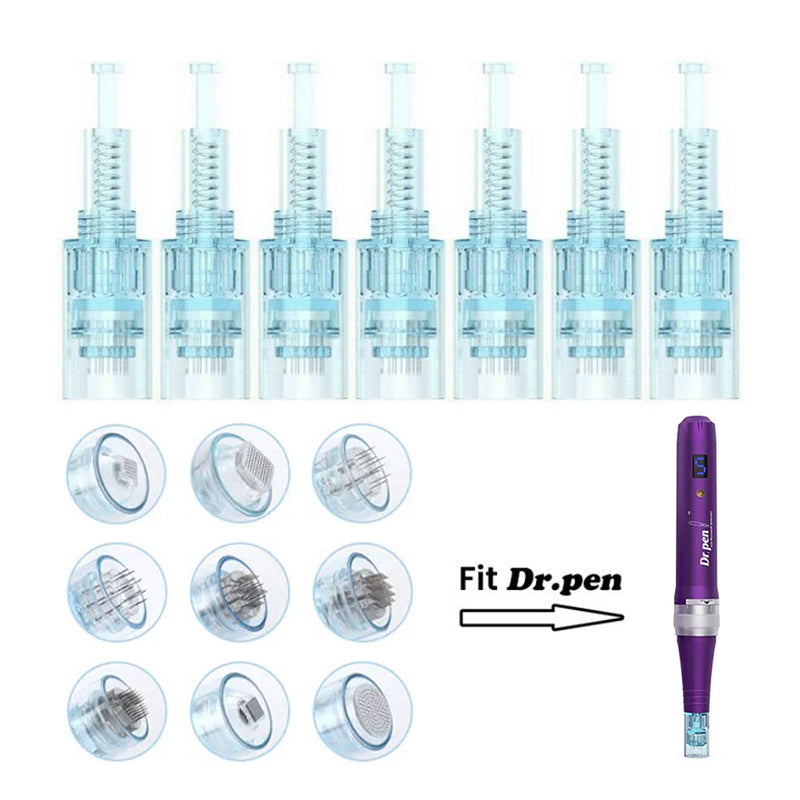
X5 cartridges screw into the handpiece rather than clicking on, and they are made for the X5 handpiece — Dr. Pen matches each cartridge system to particular models, so a head from another line will not seat here.
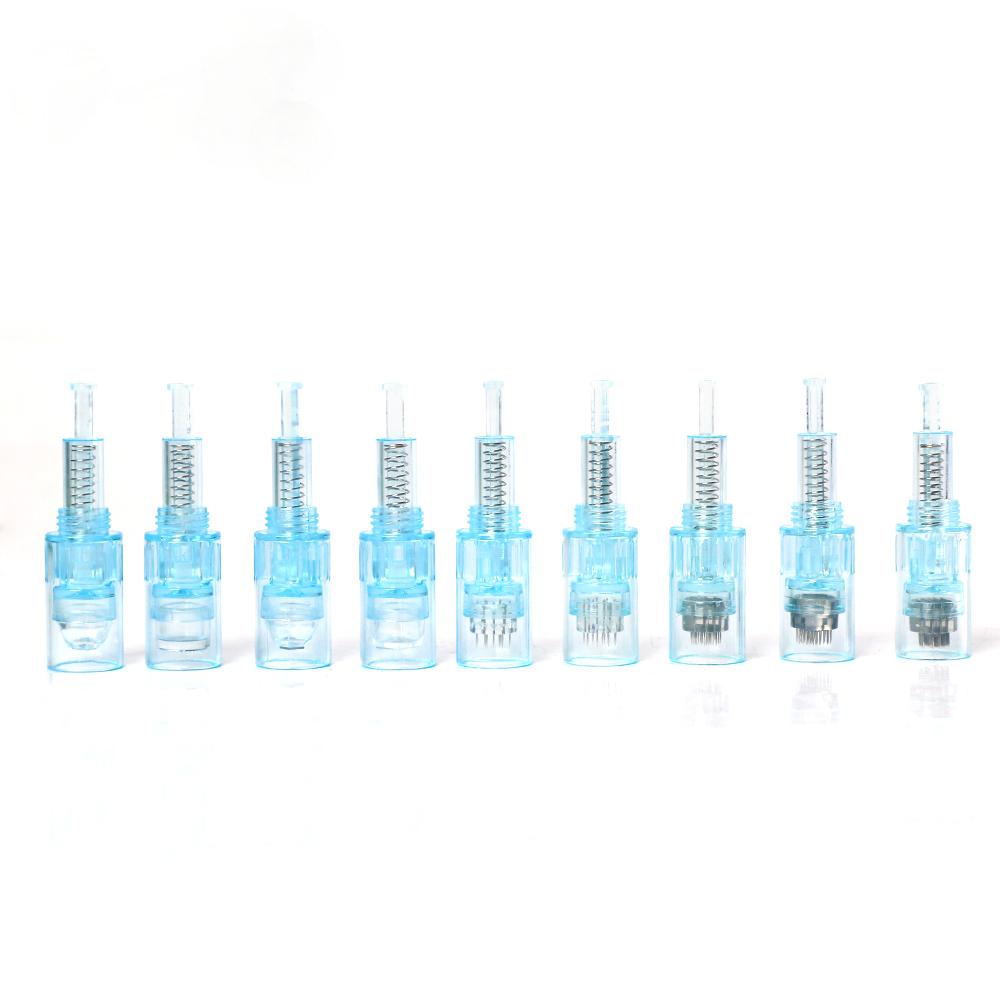
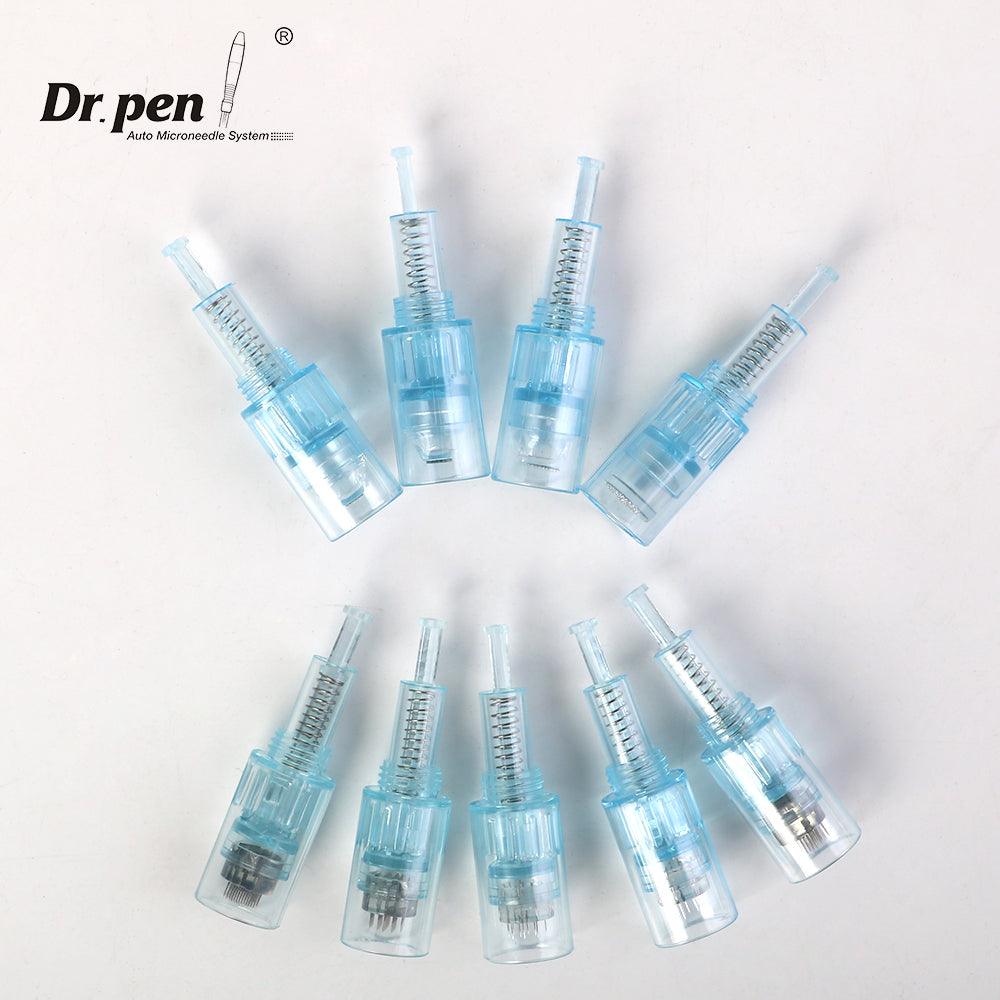
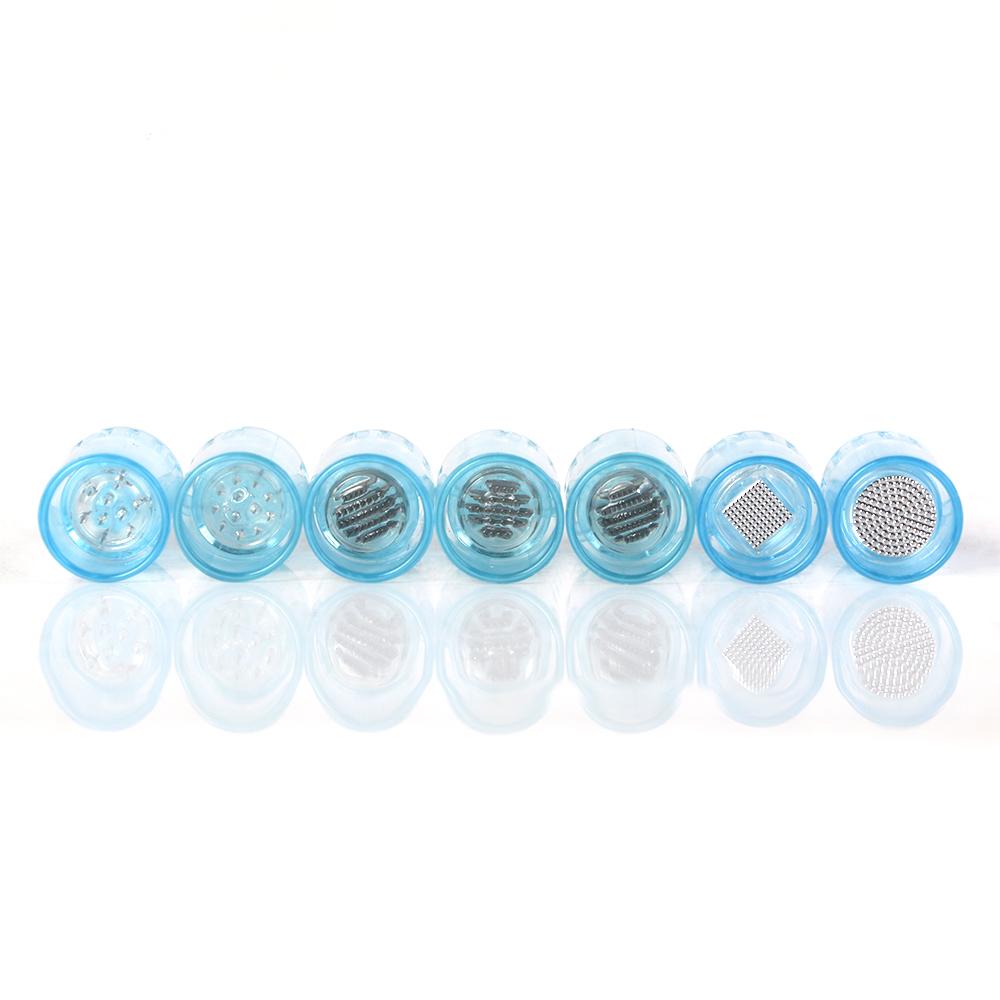
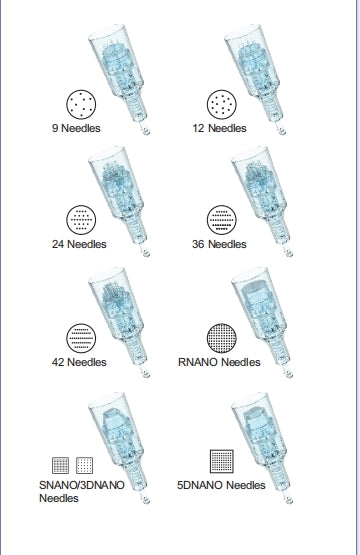
Eight heads, three of them nano
Depth is set on the pen — the X5 needle dial runs from 0 mm to 2.5 mm — and the head decides how much skin each pass covers. The five needling heads step up in density; the three nano heads carry no needles at all.
| Head | Best for | Typical depth |
|---|---|---|
| 9-pin | Working to a line — a single crease, a narrow strip you can follow closely | 0.25–0.5 mm |
| 12-pin | The standard facial head — targeted passes across the face | 0.25–1.0 mm |
| 24-pin | Whole-face coverage with fewer passes per zone | 0.25–1.0 mm |
| 36-pin | Neck, jawline, décolletage and the body — larger areas, fewer passes | 0.5–1.5 mm |
| 42-pin | The widest needling head in this line — the fastest way across a big area | 0.5–1.5 mm |
| Round Nano | No-needle surface work — pressing a serum in, under-eye, weekly upkeep | ≤ 0.25 mm — no needles |
| 3D | The three-dimensional nano tip — glides a serum through the contours of the face rather than across a flat plane | ≤ 0.25 mm — no needles |
| 5D | The multi-angle nano tip — the widest of the three nano surfaces, for brightening and pigment routines | ≤ 0.25 mm — no needles |
Safe depth by concern is in our needle depth guide — at home, keep facial depth at or below 1.0 mm; above 1.5 mm is for trained practitioners.
How deep to actually set an X5
The dial goes to 2.5 mm, and that range exists for the body and for trained practitioners — not as a target for a home facial. Depth is set by the area of skin in front of you, not by the head you are holding:
- Under the eye — 0.25 mm. The thinnest skin on the face; nothing deeper belongs here.
- Face — up to 1.0 mm. The whole facial routine lives inside that, whichever head you fit.
- Scalp — around 0.5 mm. Shallow, in narrow bands between sections.
- Body — up to 1.5 mm. Beyond 1.5 mm is practitioner territory, not a home session.
The cartridge screws in, rather than clicking on
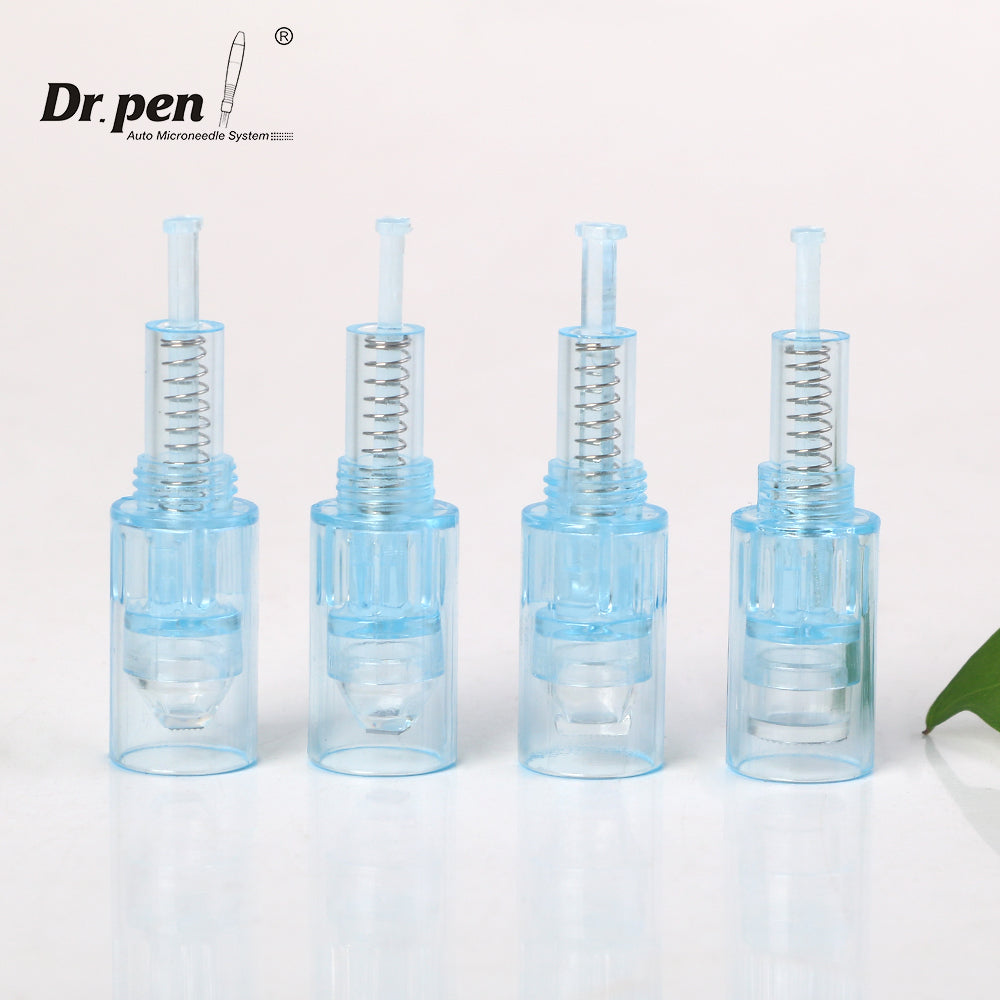
The Ultima X5 locks its cartridges by screw thread. Seat the head, turn it until it stops, and it is held by the thread rather than by a snap fitting — which is why an X5 head should never need to be pushed or forced into place. If a head will not start on the thread, stop: it is almost always a cartridge from a different Dr. Pen line rather than a stiff one, and turning it further is how a mount gets damaged.
When a nano head is the right call
The three nano heads sit at the gentle end of this range and are the ones to reach for on the days between deeper sessions: pressing a serum in, working under the eye, or finishing a session over the whole face. Because there are no needles, they are also the heads that suit a routine you want to run more often than a needling session allows. The wider explanation of how the nano tip shapes differ is in our cartridges explained guide.
Checking the pack before you use it
- One sterile blister per head, with manufacturing and expiry dates printed on it.
- Single use. A head is spent when the session ends — see can you reuse Dr. Pen cartridges?
- A listing you can verify. We are an authorised Dr. Pen retailer and stock arrives through the official supply chain — how to verify your Dr. Pen.
Complete Your Microneedling Setup
❓ Frequently Asked Questions
How deep should the X5 be set for a facial session?
At or below 1.0 mm for the face, with 0.25 mm only under the eye. The dial is capable of more than that, and it is there because the same pen also does body work — not because a facial session needs it. Set the depth for the area you are working on first, then choose the head for the coverage you want.
What is a safe depth for body work with the 36-pin or 42-pin?
Up to 1.5 mm on the body. Those two heads are the ones built for larger areas, but neither of them changes what is safe — a wider head covers more skin per pass, it does not call for a deeper setting. If you are working a small area on the face with either of them, drop back to facial depth.
Why do X5 cartridges screw in instead of clicking on?
That is how the Ultima X5 holds its cartridge — the head turns onto a screw thread and stays locked there, which keeps it stable at the pen's higher speeds. It also means a head should never need force: if it will not start on the thread, it is the wrong cartridge for this pen. Turn it gently, and stop if it resists.
When do I switch from a needling head to a nano head on the X5?
Nano heads are for the surface layer and for days when a needling session is not what you want. Pressing a serum in, working under the eye, or finishing over the whole face after a needling pass — those are nano jobs. Needling heads are for the passes where you want micro-channels at facial or body depth. Most owners keep both in the drawer and use them for different sessions rather than in the same one.
Do the X5's five speeds change which head I should use?
No. Speed is how fast the head moves, depth is how deep it goes, and the head itself is a separate choice — a 12-pin behaves like a 12-pin at any speed setting. Speed is a comfort and control dial, so start slower than you think you need and work up once you are moving the pen evenly across the skin.
Why does the X5 range carry three different nano heads?
Because nano covers more than one job. The Round Nano is the everyday one — a rounded surface for pressing product in and working small, delicate zones. The 3D is the three-dimensional tip, for gliding along the contours of the face. The 5D is the widest of the three, and the one most often kept for brightening and pigment routines. If you only buy one, buy the Round Nano.
Share